Getting Real – Real People – Real Stories – Real Photos

It’s simple: Real People, Real Stories, Real Photos

As a Charlotte industrial photographer, we create authentic industrial photography that captures the real people and the real stories behind the workplaces, the operations, and the machines.


Industrial technician handling equipment as dense vapor from liquid nitrogen spreads across the floor of a manufacturing facility.

What Makes Authentic Industrial Photography Different?

Industrial photography is about more than the machines and production lines. It’s about the people and processes that make it possible. A polished shot of a clean production line can look impressive, but it rarely tells you who a company really is. Authentic industrial photography shows the hands on the controls, the focus behind the safety glasses, and the teamwork that keeps a plant running shift after shift.


Laboratory scientist wearing a white lab coat and blue protective glove examining a petri dish in a research laboratory.

They are the people that give an industrial company its identity. These technicians, operators, and scientists bring their skill every day. We photograph them doing the work they actually do, in the places they actually do it, so the images feel true to everyone who sees them, from customers to future employees.
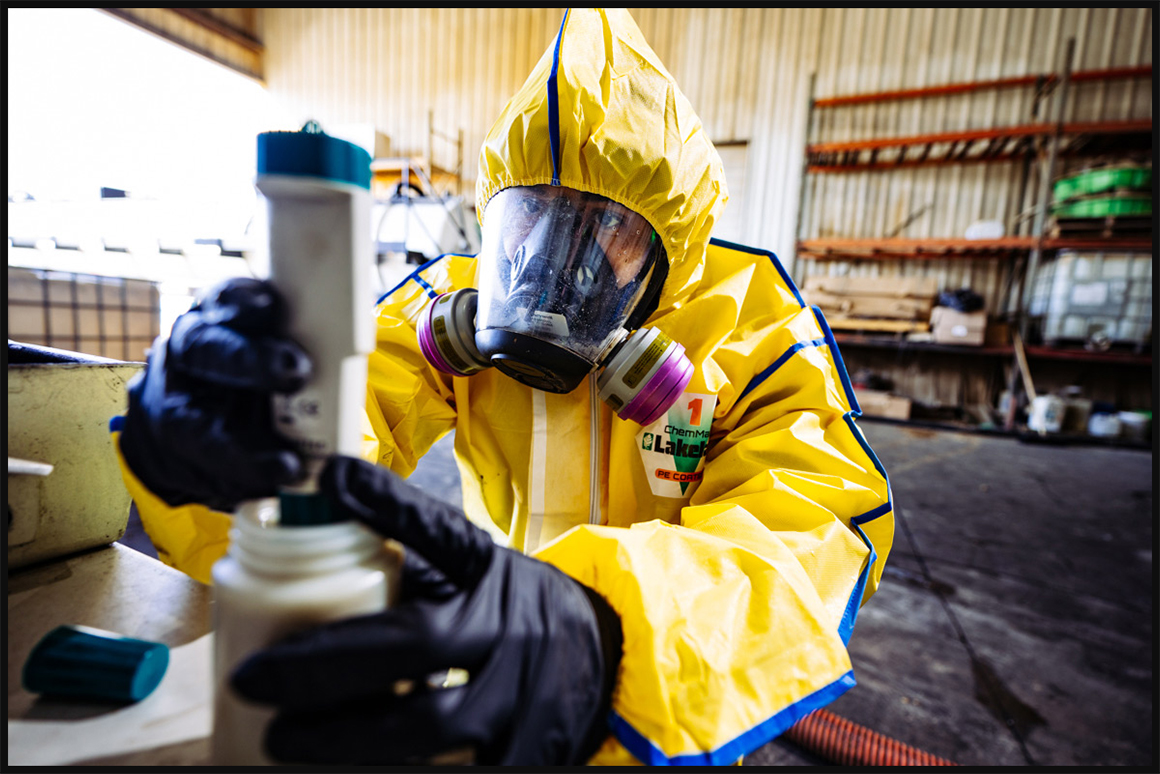
 

Chemical processing worker wearing a yellow protective suit, full-face respirator, and gloves while handling a container in an industrial facility.

Clean, Dirty, and LOUD: Photographing Real Industrial Environments

Every environment tells a different story and has a different look. Some are clean and tidy. Some are smelly and dirty. A lot of them are LOUD! We look through the environment to get to the people. That’s where the real story is.

Working in these spaces takes planning. We coordinate with plant managers and safety teams ahead of time, follow site protocols, and wear the required PPE right alongside your crew. We keep our footprint small so production keeps moving, and we work with the noise, heat, vapor, and sparks instead of hiding them. Those details are part of the story, and they’re what make the photos believable.
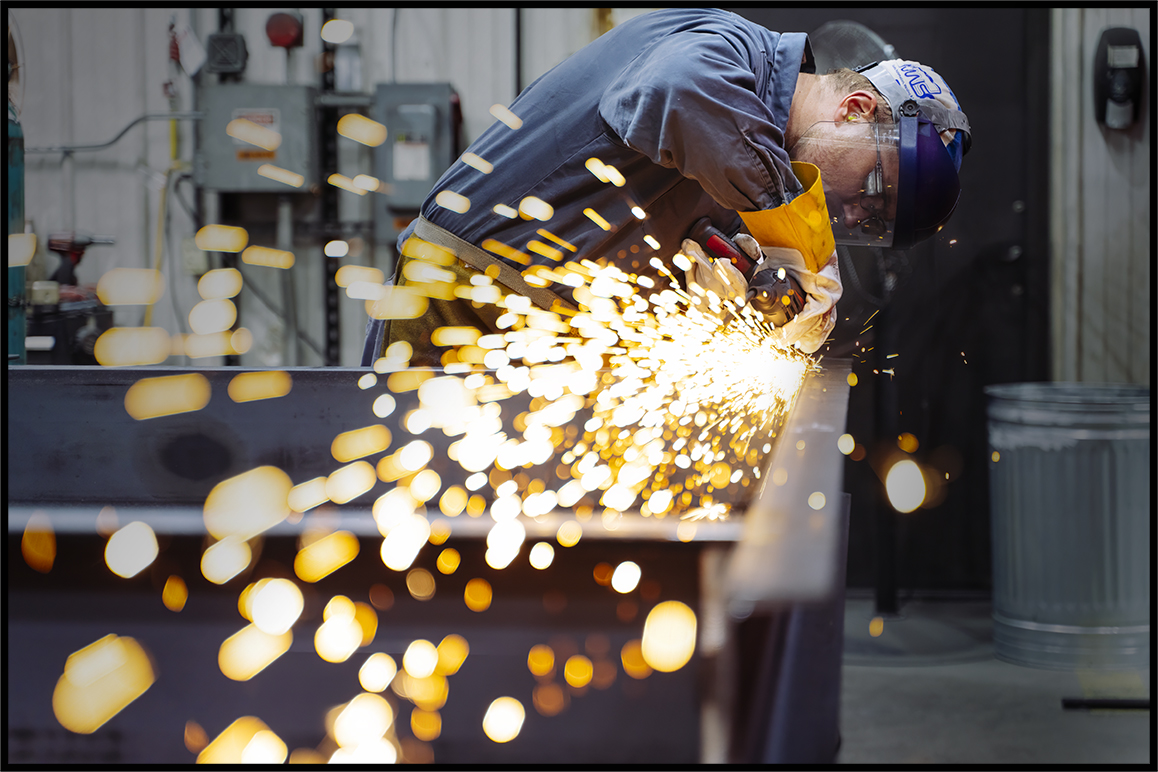
 

Metal fabrication worker wearing protective equipment operating a grinder on a steel structure as bright orange sparks fly across the workshop.


Why Authentic Industrial Photography Beats Stock Photos

Stock images of generic workers in spotless hard hats are easy to find, and just as easy to spot. Your customers, partners, and job candidates can tell the difference. Authentic industrial photography of your own people and facilities builds trust, supports recruiting, and gives your website, sales materials, and annual reports a look no competitor can copy. And when your team sees themselves in your marketing, it builds pride inside the company, too.

Where Real Industrial Photos Work Hardest

Once the images are made, authentic industrial photography does a lot of heavy lifting. Manufacturers and industrial brands use them on websites and careers pages, in recruiting campaigns, trade show graphics, sales presentations, proposals, annual reports, and social media. Because every photo shows your actual team and facility, one library can support marketing, HR, and investor communications at the same time. A single well-planned shoot can give your company a consistent visual story for years, one that reflects the people who really make your products.

Real People, Real Stories, Real Photos

These four images are part of our REAL campaign, a series that celebrates the technicians, scientists, and makers behind the industries we photograph. Each one captures real work, in a real environment, as it happens.


Authentic industrial photography of workers, chemical processing, laboratory research, and metal fabrication from the REAL campaign by Michael LoBiondo Photography.


About Michael LoBiondo

Michael LoBiondo is a Charlotte-based commercial and industrial photographer. Together with co-owner Anne LoBiondo, he has spent more than 30 years photographing the people, processes, and purpose behind American industry. The studio works with Fortune 500 corporations, manufacturing and energy brands, chemical and technology firms, and healthcare and pharmaceutical organizations, as well as the marketing teams, advertising agencies, and design firms that support them. Based in Charlotte, NC, Michael travels regionally for industrial, corporate, and healthcare photography assignments.

Want to Learn More?

See more of our work on our industrial photography page, or explore our corporate photography and healthcare photography services. You can also learn more about our studio or contact us to talk about how authentic industrial photography can tell your team’s real story.


Photographing Skilled Work: Recruiting Photography for Manufacturers

  HVAC service technician inspecting equipment outside a commercial facility.   Many of the companies we work with are built around people doing skilled work, and photographing skilled work authentically is at the heart of what we do. Manufacturing. Industrial services. HVAC. Healthcare. Corporate environments. While every assignment is different, the goal is often the same: create images that feel believable and relatable to the people the company serves. HVAC technician portrait created for industrial services and B2B marketing materials. In B2B marketing, buyers want to understand who they’re doing business with. That means showing the people, environments, and professionalism behind the brand. Whether we’re photographing employees, leadership teams, or talent brought in for a project, the objective is to create images that reflect the work itself. Because good business photography is always less about the camera and more about the story being told. Commercial photographer creating marketing imagery on location for an HVAC and industrial services company.

Why Recruiting Photos Matter for Manufacturers

Skilled trades are hard to hire for, and candidates usually decide whether to apply after a few minutes on your careers page. If that page is filled with stock photos, they learn nothing about your plant, your people, or what a normal shift looks like. Real photos of your team at work answer those questions before an interview ever happens, and they help the right people self-select into the job.

What to Photograph for a Manufacturing Careers Page

  • People doing the actual jobs you are hiring for, from machine operators to maintenance techs and quality inspectors
  • Training and mentoring, showing that new hires are supported while they learn
  • Safety in action: correct PPE, clean work areas, and safe equipment use
  • Teamwork and culture, including shift meetings, breakrooms, and recognition moments
  • Career paths, such as an apprentice working alongside a team lead
  • Your facility, so candidates know what they are walking into on day one

Tips for Planning a Recruiting Shoot

  • Bring HR and operations together early so the shot list matches the roles you need to fill.
  • Ask for volunteers across roles and shifts who reflect your real workforce.
  • Collect photo releases before the shoot day.
  • Schedule around production so lines keep running and people are relaxed.
  • Check PPE in every frame. Candidates notice, and so does your safety team.
  • Plan for horizontal and vertical crops so images work on the careers page, job ads, and social media.

Where These Images Get Used

A single recruiting shoot can supply your careers page, job board listings, LinkedIn and social posts, job fair banners, onboarding materials, and internal newsletters, all with a consistent, believable look.

Common Mistakes to Avoid

  • Showing only leadership. Candidates want to see the people they will work beside, not just the executive team.
  • Over-staging. Spotless, empty floors and forced smiles feel as fake as stock photography.
  • Ignoring second and third shift. If you hire for nights, show nights.
  • One-and-done shoots. Photos from five years ago may show equipment, uniforms, or people who are no longer there.

Keeping Recruiting Photos Current

Plants change. New lines go in, teams grow, and safety standards evolve. Planning a short refresh every year or two keeps your careers page accurate and gives your recruiting team new images for each hiring push. Because we keep the same lighting and style from shoot to shoot, new photos sit comfortably next to the originals.

Good recruiting photography does not need to be flashy. It needs to be honest, well lit, and focused on the people who make your products, because those are the people your next hire wants to meet.

A quick test: if a candidate looked only at the photos on your careers page, would they understand what the job is, where it happens, and who they would work with? If the answer is no, it is probably time for new images.

See more about our manufacturing photography, or contact us to plan a recruiting shoot at your facility.

More Later – ML  

Visions in Steel: Photographing Structural Steel Projects


Recently we had the opportunity to work with the American Institute of Steel Construction to photograph workers and architecture for their Vision in Steel project. This manufacturing photography project took us through steel manufacturing facilities across North Carolina and Virginia, capturing employees at work, creating environmental portraits, and architectural photographs of local projects that their marketing teams use for B2B communications.


These are the people we love to photograph, especially in precision-driven environments like machining and fabrication. We moved through each plant with a small footprint, observed the workflow, got to know each person, and planned our photography in a way that reflects their pride and craftsmanship along with the buildings that utilized their skills and expertise.

We found the project to be exciting, and the client was very happy with the results.

To view more about this project and AISC, click here.

Related: learn more about our steel fabrication photography.

More later, ML


Start small, Think big: Eight Manufacturing Images

Start small, think big. ~ Steve Jobs

Michael LoBiondo Photography - Manufacturing for industry - Photography by Michael LoBiondo Photography

We hit the road recently to photograph the manufacturing and fulfillment process for a client who creates bolts and other products that manufacturers use. 

With supply chain issues in the news, here’s a group of dedicated workers who are getting it done. Our manufacturing images tell that story for the company and the brand. 

Over two days, we captured images with motion, color, and authenticity. 

From workers spray-painting bolts and testing the bolt threads for accuracy to a wide shot of a warehouse, stocked with products ready for shipping.

Michael LoBiondo Photography - Manufacturing for industry - Photography by Michael LoBiondo Photography

Some people assume manufacturing photography or industrial product photography is always boring. We say…are you kidding?

We know it’s possible to bring artistry to a realm of dirty metal and messy paint. That artistry will help your clients connect with your brand and understand what you’re all about.

As Steve Jobs said, it’s all about focusing on the small things to make a big impact.

Michael LoBiondo Photography - Manufacturing for industry - Photography by Michael LoBiondo Photography

Related: learn more about our manufacturing photography.

More Later…ML

Hard Hats & Hustle: The Story of Industry in 5 Recent Photos

“Great photography is about depth of feeling, not depth of field.”— Peter Adams

As an industrial photographer, I’m not just capturing machines and materials; I’m chronicling the symphony of human ingenuity played out on factory floors and construction sites. It’s a world of grit and grace, where sparks fly alongside quiet determination, and the rhythmic clang of metal meets the focused hum of concentration.

OK, well, let’s tell it like it really is. These people work where it’s dirty, grimy, loud and smelly. Here are 5 recent images from different projects that showcase what they do and where they do it.


lobiondo industrial technology manufacturing 9085

1. Laser-Focused (Western NC): She stands in a maze of pipes and valves, hard hat and safety goggles ready, clipboard clutched in hand, laser-focused on the task at hand. In that single frame, I saw someone unconcerned with the noise and distractions around her.

Michael LoBiondo Photography - worker moving glass for installation

2. The Glass Dance (Greensboro, NC): A ballet of brawn and precision. Making it looks easy as he maneuvers a glass panel, its surface reflecting the world around it in distorted fragments. Care in handling is one of the cornerstones of this client’s business, and a lifestyle shot like this helps demonstrate it clearly.

Michael LoBiondo Photography - walking along paper manufacturing rollers

3. The Catwalk King (NC): On the catwalk, bathed in the eerie glow of industrial lights, he walked. A lone figure in a vibrant yellow t-shirt, a stark contrast to the steel and shadows that surrounded him. By showing a member of the team in relation to the equipment, I can show the scale of this company’s manufacturing process.

Michael LoBiondo Photography - grinding metalwork

4. The Spark of Creation (Wisconsin): It is always a fleeting moment, captured in a fraction of a second, but one of my favorite images to capture. A grinder’s wheel spits fiery orange and yellow. This image shows a raw energy that fuels industry, a reminder that beauty can be found even in the most primal forms of creation. Action shots like this are one of the best ways to capture attention of your website or marketing materials.

Michael LoBiondo Photography - forklift operator moving product in warehouse

5. The Warehouse Waltz (Charlotte, NC): A dance of steel and rubber. A forklift, its driver focused on the path, conducting this silent symphony, orchestrating the flow of materials with practiced ease and constant motion. Clean lines and a neat, organized warehouse highlight the efficiency of this client’s supply chain.

These five images are just a glimpse into the vast world of commercial industrial photography. They are windows into progress and the human spirit. After more than 30 years in this business , it’s still an honor to be a storyteller in this world, to capture the beauty and the power that often go unseen. 2023 was filled with moments like these across the US. I can’t wait to see where 2024 brings me.

How to Prepare Your Plant for a Photo Shoot

Every one of the images above came from a working facility, and none of them happened by accident. If you are planning photography at your own plant, a little preparation goes a long way. Here is what we ask our industrial clients to think about before the shoot day.

1. Decide what the photos are for

Recruiting, sales, a website refresh, and an annual report all call for different images. Agreeing on the main uses helps decide which areas, people, and processes belong on the shot list.

2. Choose the areas and the people

Pick the lines, cells, and spaces that best show what you do, and ask for volunteers in the roles you want to feature. Include different shifts if night work is part of your story.

3. Clean up, but not too much

Clear clutter, trash, and anything that looks unsafe, but leave the real character of the floor. A plant that looks too perfect feels staged. Grit and activity are part of the story.

4. Confirm safety rules and PPE

Share your PPE requirements, site orientation, and restricted areas in advance. Every person in frame should be wearing the right gear, because customers, candidates, and your safety team will all notice.

5. Clear confidential items

Identify proprietary equipment, customer parts, screens, and documents that should not appear in photos so they can be covered or avoided.

6. Name a point person and plan around production

One contact who knows the plant, the people, and the schedule makes the day run smoothly. Plan photography windows around shift changes and critical runs so production keeps moving.

Planning photography at your facility? Learn more about our industrial photography and manufacturing photography, or contact us to talk through your shoot.

More later…

Michael

Behind the Scenes with Polymers

Michael LoBiondo Industrial Photography Portfolio - Worker inspecting clear polymer pump cover

“Great things are done by a series of small things brought together.” Vincent Van Gogh

They’re everywhere. And they’re often invisible.

We’re talking about polymers. Manufacturers use these natural or synthetic substances to create  thousands of products, including small parts essential to the function of big products. Polymers are in everything from cars to artificial joints to pool pumps. 

Clients often call us when they need to show their polymer capabilities to potential buyers. As experienced industrial photographers, we’re often shooting on the manufacturing floor and these assignments never fail to fascinate.

Our goal?  Create visually exciting photos that help build our clients’ businesses.  

Our images reveal the expertise of the people doing the work.  From the beginning stage of polymers in pellet form, ready to be shipped in 1,000-pound bags….

Michael LoBiondo Industrial Photography Portfolio - Worker inspecting polymer pellets

or melted into barrels….

Michael LoBiondo Industrial Photography Portfolio - Worker watching melted polymer in barrel

or to be manufactured into something new.

We’ve captured every step of the process, from production of polymers themselves, to products made with polymers, to tests on the results.  

Michael LoBiondo Industrial Photography Portfolio - Worker in quality control of paper coating lab
Michael LoBiondo Industrial Photography Portfolio – Worker in quality control of paper coating lab

Though we aren’t manufacturers, we appreciate the complexity of what manufacturers do.  Our curiosity can help us see visual opportunities that others might miss.

On any industrial shoot, we take time to understand the process we’re witnessing. That deep interest is essential to capturing meaningful photos. It’s the difference between grabbing a snapshot versus crafting an image. 

We’ve photographed everything from sweeping panoramas of manufacturing floors to workers with sharp eyes on the inspection line.  

From checking coated paper to be used in brochures, stickers and other applications….

Michael LoBiondo Industrial Photography Portfolio - Worker inspecting coating in paper plant

to studying a sheet for any imperfections, as no detail goes unnoticed.

Michael LoBiondo Industrial Photography Portfolio - Worker checking paper roll in paper plant

Our process begins with conversations about a client’s goals and creating a preferred shot list.  On site, we make discoveries and capture unexpected images to fulfill the client’s vision.

We’re grateful to have received referrals from industrial clients. Every manufacturing job deepens our knowledge and respect for the field.  It’s fascinating to learn how clients are solving problems for their customers.

Related: learn more about our manufacturing photography.

More later…

Michael

From Brand Confusion to Organized Photo Library

“It’s not about creating an object. It’s about creating a perspective.”  Albert Paley, American Metal Sculptor, (1944-)

Every marketing director and ad agency has been there. 

Michael LoBiondo Photography - Yard supervisor reviewing in-house equipment

You’ve got a great opportunity to promote your brand. You need the right image, right away. But it just isn’t in your photo files.

That’s one reason why clients ask us to create a photo library for their brand.

Michael LoBiondo Photography Industrial Photography: Setting of safety cone - checking equipment

A photo library expresses, image after image, what your brand is all about.  Having a photo library makes your life easier because it conveys your message in a consistent way. Having your media shot by a professional photographer means that the images are high-resolution and thoughtfully composed, allowing them the versatility of both print and digital.

The custom images belong together and feel right in every marketing application. You can quickly find a great shot for any need.

Corporate photography of security expert with branded car on location

Ads. Company website. Social media posts. Marketing collateral. Banners and trade show booths. Catalogs. Even photos on the sides of trucks.

Corporate photography of security company operation call center with employees on location

It takes organization and care to shoot a great photo library, with scouting to identify and plan the most visual shots.

We fulfill the shot list and also suggest fresh possibilities in the moment. 

Our goal is to translate your brand message into a cohesive set of images depicting your products, services and people. 

To show what you can’t say in words alone.

Corporate photography of security expert on location at a construction site with crane

Forget frantic hours searching through a mishmash of old photos that are dated or just…meh.  There’s a better way. 

See our examples of an industrial photo library, corporate photo library, and healthcare photo library or contact us for inspiration.

We can see your gears turning!  Ours are, too. 

Stay creative….

ML

How to Build a Brand Photo Library

1. Audit what you already have

Start by gathering the images your team actually uses. Note what is outdated, off-brand, or missing. Gaps usually jump out quickly: no current leadership photos, nothing that shows a new facility, or no images that work as website banners.

2. List where the images will be used

Website, sales decks, trade show graphics, social media, recruiting, and annual reports all have different needs. Knowing the uses up front tells you how many images you need, which orientations, and where to leave room for text.

3. Build a shot list by category

  • People: leadership, teams, and employees at work
  • Places: offices, plants, labs, and exteriors
  • Process: the steps that show how your work gets done
  • Products: hero shots, details, and products in use
  • Culture: collaboration, training, and recognition

4. Match your brand guidelines

Share your colors, tone, and examples of images you like. Consistent lighting, color, and composition are what make a library feel like one brand instead of a collection of unrelated photos.

Organizing Your Library So People Can Find Images

A great library is only useful if people can find what they need. Organize images into clear folders by category and location, use consistent file names, add keywords where your system allows it, and keep both web-ready and print-ready versions.

Keeping the Library Current

Businesses change, and libraries need to keep up. Plan a refresh every year or two to add new hires, facilities, and products, and retire images that no longer reflect who you are.

We build brand photo libraries for many industries. Learn more about corporate, industrial, healthcare, pharmaceutical, and product brand libraries, or contact us to start yours.

Brand Photo Library Mistakes to Avoid

  • Shooting only what you need this month. A library should anticipate the next year of marketing, not just the next campaign.
  • Forgetting text space. Website banners and ads need images with room for headlines.
  • Mixing styles. Images from many different shoots and photographers rarely look like one brand.
  • Losing track of usage rights. Keep notes on who appears in each image and how it can be used.

Avoiding these mistakes is what turns a folder of nice photos into a true brand asset your whole team can rely on.

In The Factory & On The Rooftop

“The cause is hidden. The effect is visible to all” Ovid

An in-house corporate marketing team for a major manufacturer called us with exactly the kind of challenge we relish as industrial photographers.

This company manufactures and installs air handling systems for huge enterprises, from pharmaceutical and car manufacturers to warehouses, universities, and hospitals. But their photo gallery was dated and didn’t portray the diversity of their modern workforce.

Michael LoBiondo Photography - Environmental portrait of worker on location

The client also needed to show the complex processes involved in creating HVAC systems that keep everyone comfortable and productive in a building that might be a million square feet. 

We aimed to reveal all the capabilities of this dynamic company in compelling industrial images of welding, manufacturing, installation and more.  From a pump installation in a unit before it arrives at the customer’s building…

Michael LoBiondo Industrial Photography - Worker connecting pump

…to positioning water piping on site at a customer’s location.

Michael LoBiondo Photography - Worker installing cooling pipe for HVAC

From shots that make you feel as if you’re immersed in the action – in this case, grinding raw metal…

Michael LoBiondo Photography - welding metal for rooftop unit

to portraits that convey their professionals’ authority, knowledge and experience.

Michael LoBiondo Photography - Environmental portrait of worker on location

After discussing goals for this shoot with our client and scouting various locations, we developed an advance shot list. But we also observed what was happening at their location over two days to identify how to represent the client’s work in the most visual way.

There was careful planning and improvisation. Thinking through composition, lighting, and color, while keeping safety a focus. A lot of thoughtfulness and, we hope, a little magic in the results.

See more of our commercial industrial photography portfolio and learn more about our philosophy on using images to capture the attention of prospects and customers.

Michael LoBiondo Photography - Workers on rooftop installing HVAC unit

The public never sees this client’s work.  It’s behind the walls, in the ceiling, on the rooftop.

Stay Creative,

ML


Related: learn more about our manufacturing photography.

Create Compelling Stories – Artistic Demolition

“Creativity doesn’t wait for the perfect moment. It fashions its own perfect moments out of ordinary ones.”

Bruce Garrabrandt

Demolishing a building might seem like a straightforward process. Give a structure some good blows with the right equipment and it will succumb, right?

But the real story is more intriguing and complex. The demolition team plans its moves carefully, because first, last, and in between comes safety.

Industrial Photography - Worker cutting metal tank

Some steps, outsiders wouldn’t expect. Check out the spray of sparks as a welder cuts a metal tank into manageable chunks, ready for recycling, before any walls come down.

There’s a certain artistry required to get the job done right. And people who take pride in their ability to do what they do, such as taking apart what needs to be taken apart.

Through demolition photography and other industrial work, we help clients reveal the compelling hidden stories of the workplace. We help you tell your story, anywhere and everywhere.

An industrial site or factory floor. A hospital. A corporate boardroom.

What’s your story that no one knows?

Industrial Photography - Worker on demolition site


Related: learn more about our industrial photography.

To Build Up, You Have To Dig A Ditch First

industrial design location construction 2057 1030x634 1

Some jobs build up. They start with concrete, steel girders, plans in pencil and ink. Pieces get put together slowly, brick by brick, bolt by bolt. Then they reach up to the sky.

A guy digging a ditch - industrial location photography
Michael LoBiondo Photography – A guy digging a ditch – industrial location photography

Some jobs dig down, through the red clay. They move water and material. Things get put in the ground then covered up like they were never there, doing their work as an afterthought. After a while, no one notices there ever was a hole in the ground.

Whether we’re up on a ladder or down in a ditch, on-site industrial photography captures the work that builds our world—and the work that keeps it running underground.

Related: learn more about our industrial photography.